Resume Maker Secrets: Must Have Features in an AI Resume Builder for 2025
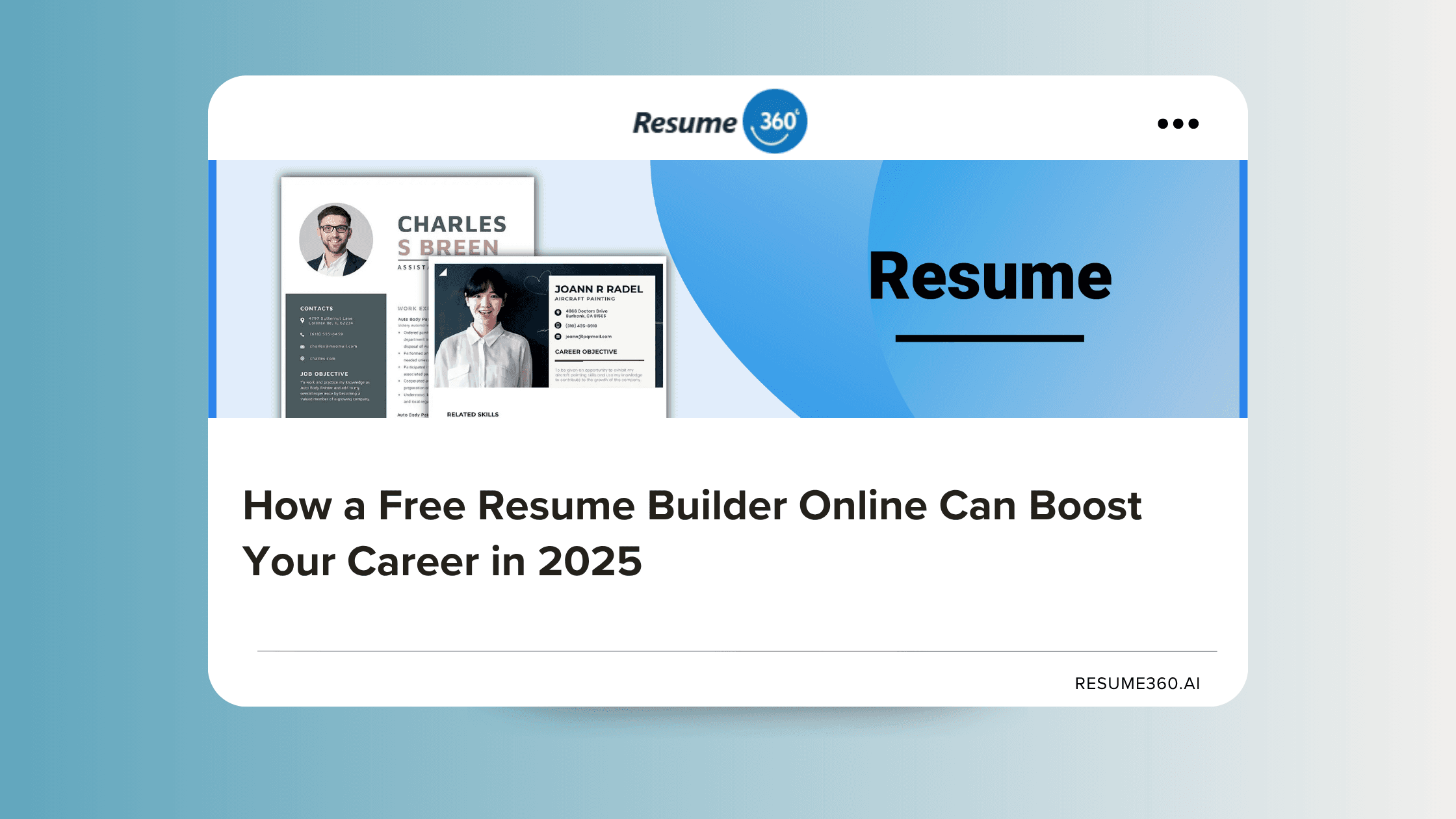
In 2025 the job market runs on automation and speed. An AI Resume Builder is not a luxury anymore. It is a core part of any modern job search toolkit. If you want to land interviews, you need a Free Resume Builder Online that understands Applicant Tracking System logic, a Resume Maker that writes clearly, and an ATS Friendly Resume Builder that guarantees parseable output. This deep dive walks you through the essential features to look for, why they matter, and how an advanced platform like Resume360.ai implements them using Professional Social Media Platform automation. Read on to discover the practical features that will help your resume pass ATS checks, impress hiring managers, and shorten your time to hire. Why AI Resume Builders Matter Now Applicant Tracking Systems and AI driven recruitment tools screen most resumes before a human ever sees them. That means your resume must be both readable and relevant. Basic Resume Maker templates fail against modern algorithms because they ignore context, semantics, and file compatibility. The right AI Resume Builder combines natural language processing, keyword matching, and export safety to produce documents that pass ATS and appeal to recruiters. A Free Resume Builder Online with these capabilities saves time and increases interview rates. Core Feature 1: Keyword Matching and ATS Optimization Keyword matching is the foundation of an effective AI Resume Builder. Top platforms scan job descriptions and map relevant keywords to your profile. The best systems do more than count words. They use semantic matching, so a phrase like “data analysis” matches “data analytics” or “analyzed datasets” in context. An ATS Friendly Resume Builder will prioritize terms that matter, suggest where to place them, and avoid keyword stuffing. Why this matters: ATS systems evaluate relevance using semantic scores. Proper keyword placement boosts your match rate and visibility. The right Resume Maker tests against common ATS vendors to reduce false negatives. Look for a Free Resume Builder Online that provides a match score and shows which keywords are missing. That transparency is a game changer for beginners and professionals alike. Core Feature 2: Generative Writing and Content Rewriting Blank page syndrome is real. A good AI Resume Builder uses generative writing to turn basic Professional Social Media Platform entries into achievement driven bullets. Instead of “worked on projects” the Resume Maker should produce quantifiable lines like “managed five product sprints, reducing release cycle by 20 percent.” Generative writing should be controllable, editable, and tuned to your voice. Key benefits: Quickly converts short entries into performance oriented statements. Prompts you to add metrics, results, and impact. Saves hours while producing professional quality language. Choose an AI Resume Builder that offers editable suggestions, so you stay in control of claims and tone. Core Feature 3: Professional Social Media Platform Import and End to End Automation A top Free Resume Builder Online must automate import from Professional Social Media Platform through secure OAuth. That single convenience eliminates manual copying errors, ensures dates and titles match, and captures endorsements and certifications. A Resume Maker that automates via LinkedIn turns your profile into a living database. From there you can generate role specific resumes without rewriting. Automation flow to expect: Connect Professional Social Media Platform securely. AI analyzes profile content for keywords and achievements. The Resume Maker generates ATS friendly drafts. You customize and export in the needed formats. This automation is particularly valuable for career changers, volume applicants, and busy professionals. Core Feature 4: ATS Simulation and Parsing Tests A reliable ATS Friendly Resume Builder includes a built in ATS simulator. Before you submit, test how common systems will parse your resume. The simulator should reveal parsing errors such as misread dates, skipped sections, and dropped skills. It should also score the document and provide actionable fixes. What to expect from scans: Clear indication of header recognition and section parsing. Highlighted lines where keywords failed to register. Suggestions to change wording or headings to improve parseability. Testing before you apply reduces rejection risk and gives recruiters clean, scannable files. Core Feature 5: Tone Controls and Context Aware Language Not every job requires the same voice. Tone controls let you switch between formal, creative, executive, and technical styles without breaking ATS compatibility. The best AI Resume Builder adapts phrasing while preserving keywords and structure. How tone controls help: Aligns your resume with company culture. Helps career pivoters present transferable skills in the right language. Keeps achievements measurable and concise. A Resume Maker with tone controls is especially useful when applying across industries. Core Feature 6: Export Options and File Safety ATS systems vary in file preferences. Your AI Resume Builder should export to clean PDF, Word docx, plain text, and optionally HTML. Exports must be Unicode safe, avoid special characters, and preserve headers. A Free Resume Builder Online that previews exports in ATS view prevents surprises during submission. Important export features: Multiple export formats that remain ATS compatible. Real time preview of how your resume will look after parsing. Safe font choices and simple layout options that maximize readability. Core Feature 7: Templates That Are Actually ATS Friendly Templates are only useful if they are engineered for parsing. Single column layouts, standard headings like Professional Experience, Education, and Skills, and consistent date formats are non negotiable. An ATS Friendly Resume Builder will offer templates that look clean to humans while being easy for machines to read. Template checklist: Single column layout with consistent margins. Standardized section headings. No images, icons, or tables. Safe fonts like Arial or Calibri. A good Resume Maker lets you preview each template in ATS mode. Core Feature 8: Privacy, Security, and Export Control Your resume contains personal data. Make sure the AI Resume Builder follows privacy best practices, supports secure Professional Social Media Platform OAuth, and lets you control exports and data deletion. A trustworthy Resume Maker offers transparent pricing, clear data policies, and customer support. Why Resume360.ai Exemplifies These Features Resume360.ai demonstrates how an AI Resume Builder should work in practice. It automates Professional Social
Read article