Introduction
Recruiting teams are being asked to do more with less time. Candidate volumes are increasing, skills are changing quickly, and hiring managers still expect recruiters to deliver strong shortlists fast. At the same time, AI is being used by both employers and candidates, changing how talent is discovered, evaluated, and communicated with.
That is creating demand for a new kind of recruiting technology: the AI recruiting agent.
An AI recruiting agent is designed to work toward a hiring objective rather than perform one isolated recruiting task. It can coordinate candidate search, profile enrichment, engagement, screening, testing, and verification while keeping recruiters involved in important decisions.
This article explains what an AI recruiting agent is, how it works, what it can automate, how it differs from traditional recruiting software, and how ezyConneqt approaches agentic recruiting.
What Is an AI Recruiting Agent?
An AI recruiting agent is an AI-powered system that can coordinate multiple recruiting activities around a defined hiring goal.
Instead of asking the recruiter to open one tool for sourcing, another for enrichment, another for outreach, and another for assessments, the agent starts with the outcome.
For example: “Find 50 qualified senior software engineers in Bengaluru with five or more years of Java and Spring Boot experience.”
The system can use that requirement to organize a workflow:
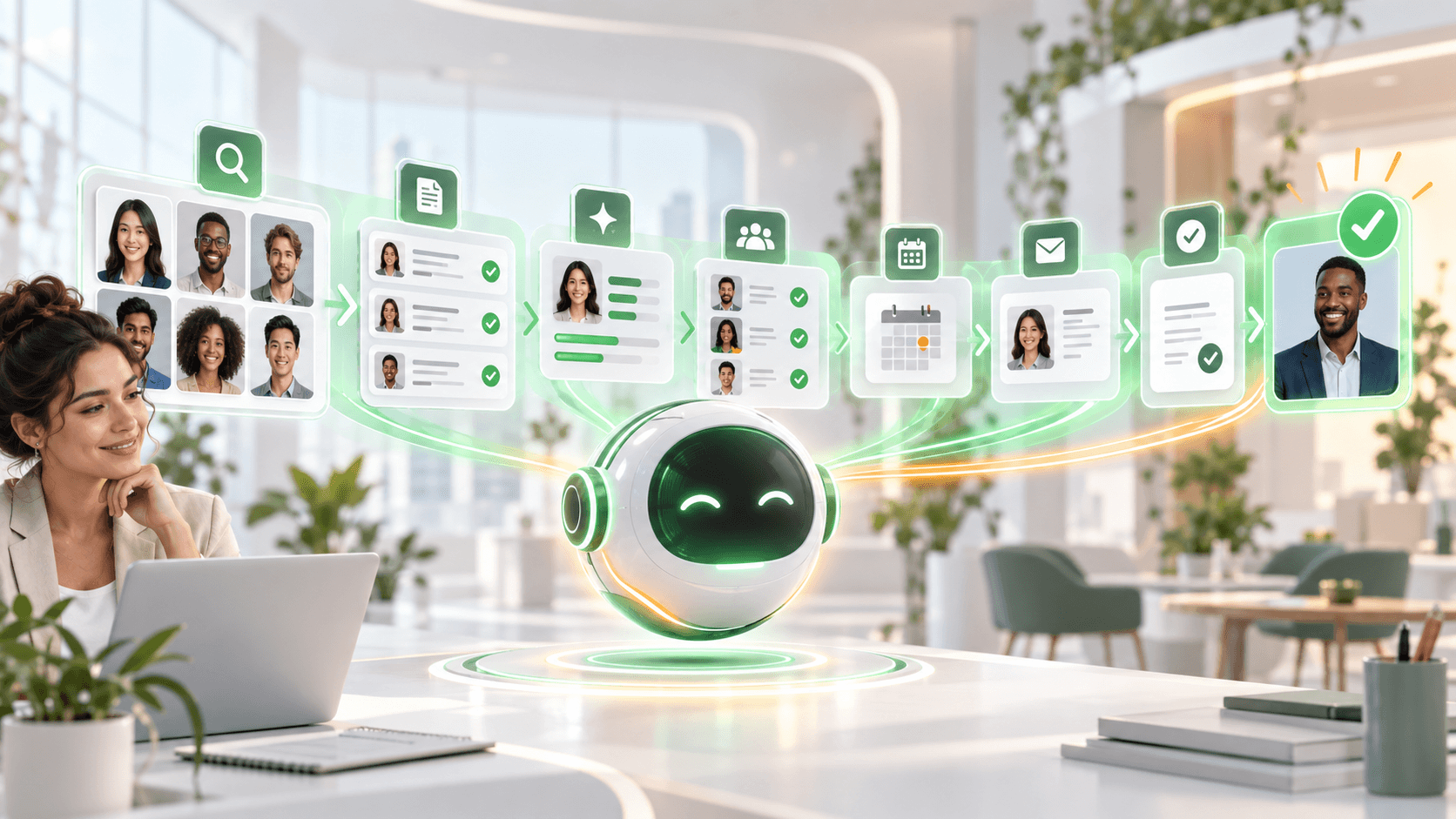
Search → Enrich → Engage → Screen → Test → Verify
The recruiter remains responsible for the hiring decision. The agent is responsible for reducing the operational workload required to reach a qualified shortlist.
How Does an AI Recruiting Agent Work?
The workflow begins with a structured hiring objective. The more clearly the recruiter defines role, skills, location, seniority, experience, company background, or other requirements, the easier it becomes to create a useful search.
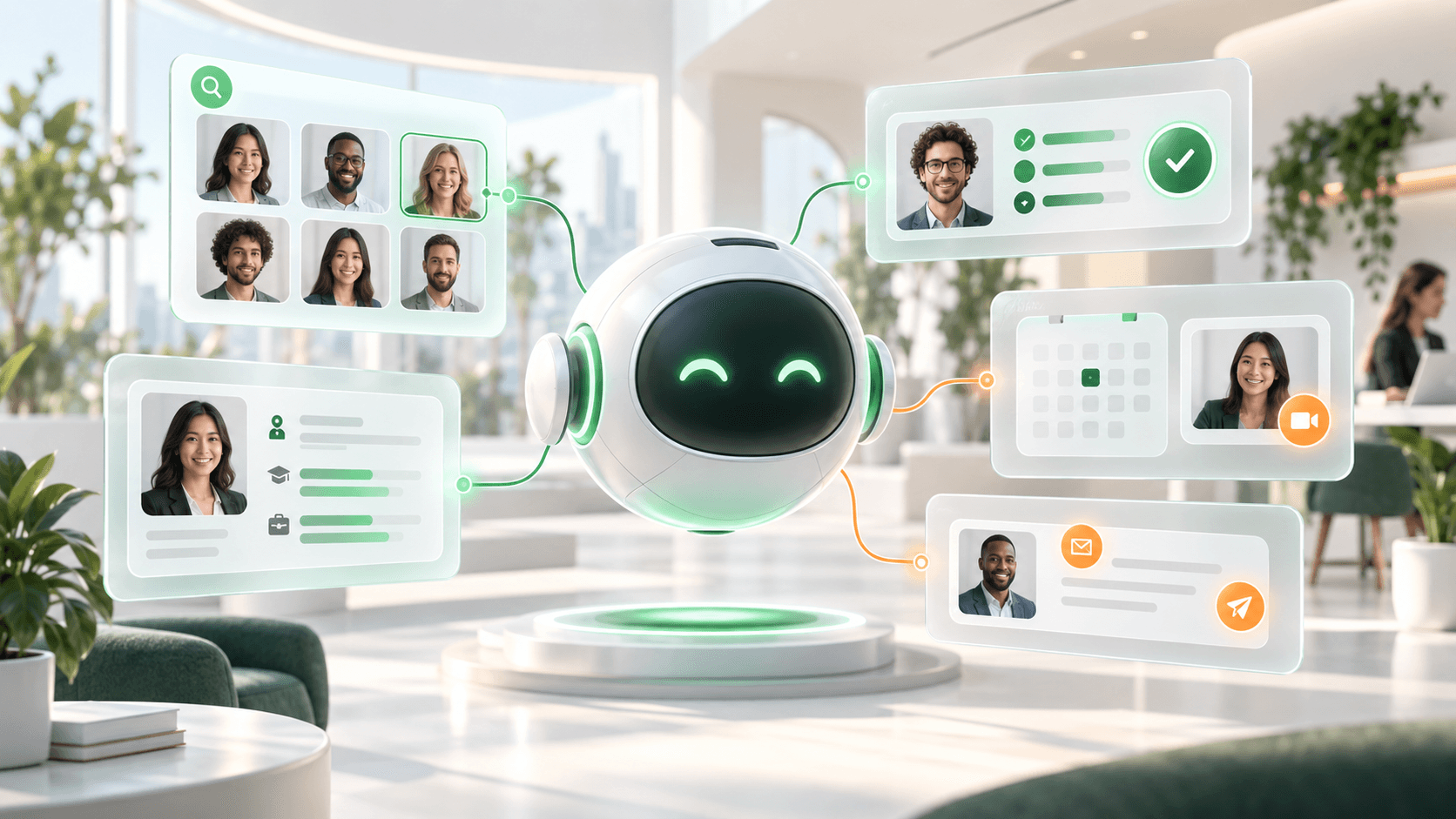
The agent then performs or coordinates the next steps. It can search for relevant profiles, enrich information, identify relevant signals, support personalized engagement, assist with screening, coordinate tests, and organize verification.
An agentic workflow also maintains context. That matters because recruiting is not a collection of unrelated tasks. A candidate found during sourcing should be the same candidate whose profile is enriched, contacted, screened, and evaluated later.
The value is continuity: the workflow moves forward without requiring a recruiter to manually restart the process at every stage.
What Can an AI Recruiting Agent Do?
AI recruiting agents can support several stages of talent acquisition:
- Search for candidates based on role, skills, location, seniority, experience, industry, technology, or other criteria.
• Enrich candidate profiles with relevant professional context.
• Support personalized outreach and follow-up.
• Assist with screening against defined requirements.
• Coordinate assessments and tests.
• Support verification workflows.
• Keep recruiters informed about progress.
• Produce organized candidate information for human review.
The exact level of automation depends on the platform and the permissions provided. The important idea is that the tasks are connected.
Can AI Agents Find Qualified Candidates?
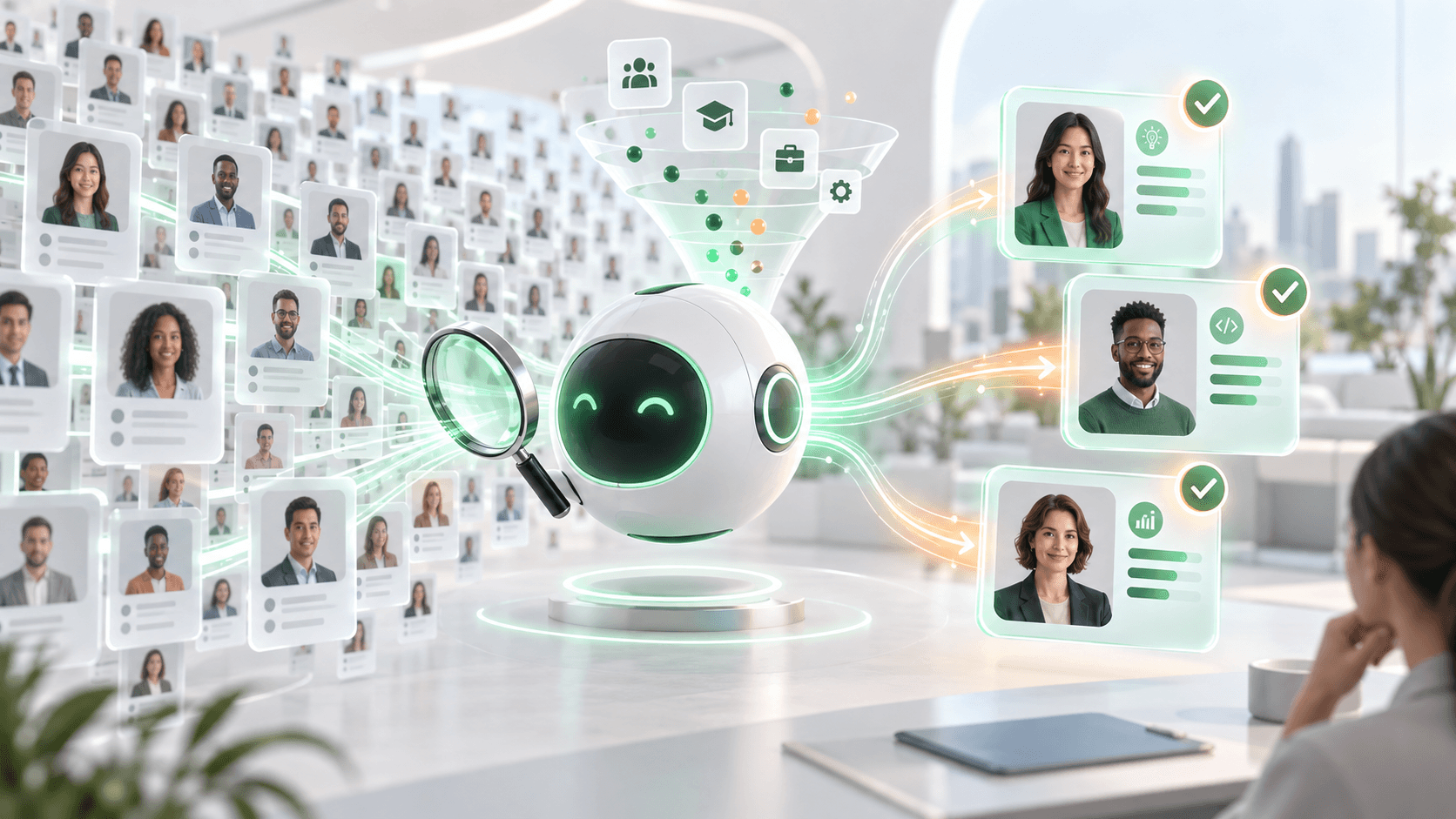
AI can help identify candidates who match defined criteria, but “qualified” should not be interpreted as “automatically approved for hire.”
Candidate qualification contains objective elements such as skills, experience, location, and professional background, but it also contains context and judgment.
A good AI recruiting workflow therefore treats matching as decision support. The agent can surface stronger potential matches and organize evidence. The recruiter evaluates the broader context and decides what happens next.
Can AI Agents Contact Candidates?
Yes, AI can support candidate engagement and personalized outreach when the necessary communication tools, permissions, and policies are in place.
The quality of the outreach matters. High-volume generic messages can damage candidate experience. Agentic systems should use relevant candidate information to make communication more contextual and useful.
The goal is not simply more messages. The goal is more relevant conversations with people who are genuinely aligned with the opportunity.
Can AI Agents Screen Candidates?
AI can assist with screening by comparing candidate information with predefined requirements and organizing relevant signals.
Screening should be designed carefully because hiring decisions can have significant consequences. Human oversight is especially important when interpreting ambiguous information, evaluating context, or making final decisions.
A practical approach is to use AI to reduce the amount of manual information processing and allow recruiters to focus their attention on candidates who warrant deeper review.
Can AI Agents Test and Verify Candidates?
Testing and verification can be incorporated into an agentic workflow so they are not isolated administrative steps.
For example, after a candidate passes an initial screening stage, the workflow can move toward an assessment. Results can then become part of the information recruiters review before making a decision.
Verification should also be handled responsibly, with appropriate consent, data controls, and process governance.
How Is an AI Recruiting Agent Different From Recruiting Software?
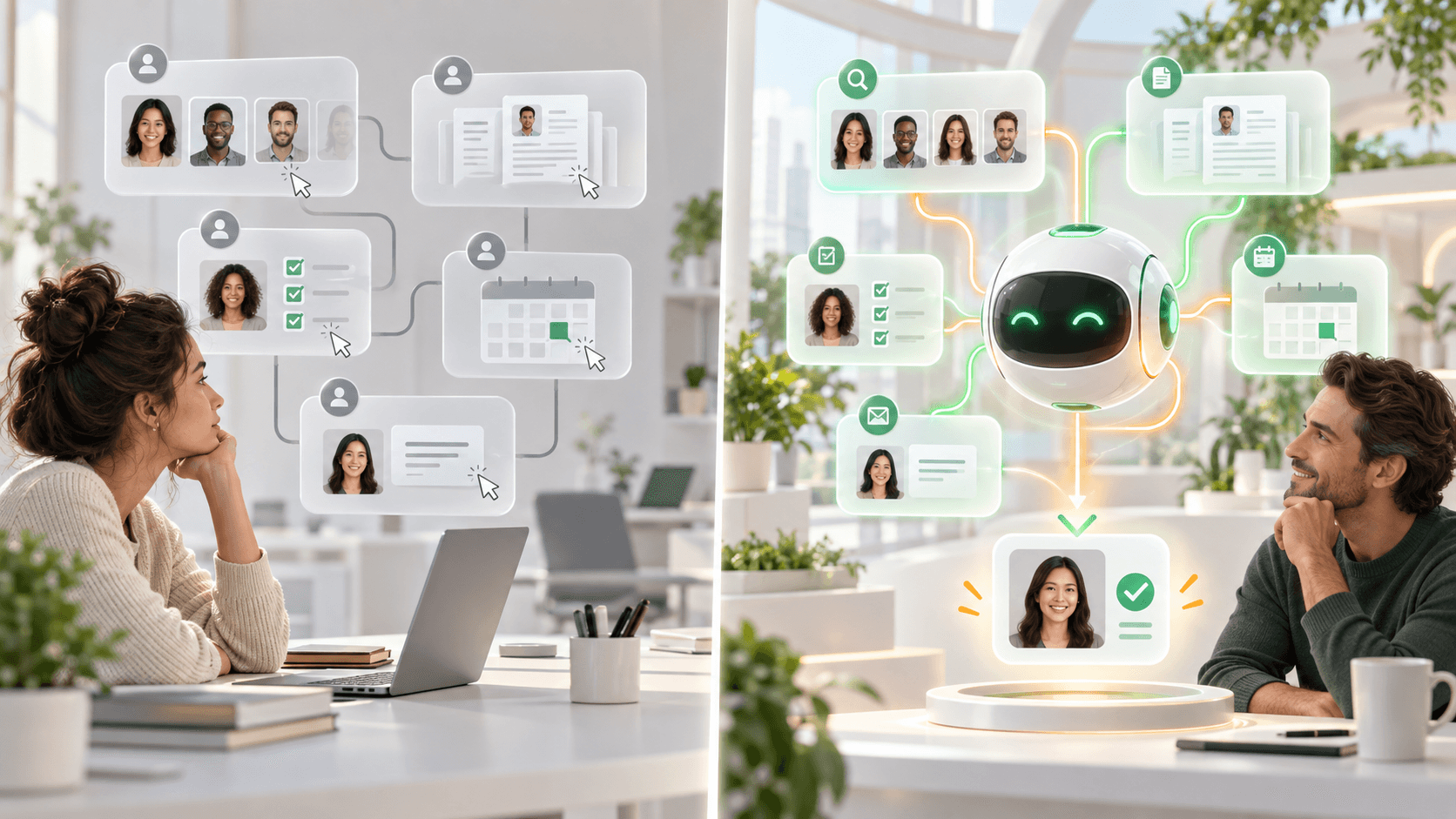
Traditional recruiting software often provides a set of tools. The recruiter decides which tool to use and when.
An AI recruiting agent is more workflow-oriented. The recruiter communicates an objective, and the agent coordinates multiple actions.
This does not mean traditional software becomes irrelevant. ATS platforms, HR systems, scheduling tools, assessment systems, and other applications can remain important. The agentic layer can help connect work across the process.
AI Recruiting Agent vs AI Copilot: What’s the Difference?
A recruiter copilot usually helps with tasks the recruiter explicitly asks it to perform. It may write an email, summarize a candidate, or generate a search query.
An AI recruiting agent can receive a broader objective and determine the sequence of approved actions required to pursue it.
Both models can coexist. A recruiter might use a copilot for a specific judgment-support task while using an agent for a multi-step sourcing and engagement workflow.
Can AI Recruiting Agents Replace Recruiters?
The more useful question is which recruiting activities should no longer require so much manual effort.
Recruiters bring relationship skills, context, judgment, communication, negotiation, interviewing expertise, and organizational knowledge. These capabilities remain important.
AI is particularly useful for the operational layer: searching, organizing information, enriching profiles, coordinating communication, tracking progress, and preparing evidence for review.
The goal should be to give recruiters more time for high-value human work, not to remove humans from hiring.
How Does ezyConneqt’s AI Recruiting Agent Work?
ezyConneqt’s recruiting agent is designed around an end-to-end process: Search → Enrich → Engage → Screen → Test → Verify.
A recruiter can describe what they need and define relevant criteria. The agent can then work through the operational stages while keeping the recruiter informed.
The approach is outcome-oriented. Instead of starting with a feature such as “candidate search,” it starts with the business requirement: find the people needed for a role and move the strongest matches toward a qualified conversation.
That makes ezyConneqt particularly relevant for teams that want to reduce sourcing and recruiting administration without removing human control.
What Should Companies Look for in an AI Recruiting Agent?
Evaluate the platform on workflow depth, data quality, search flexibility, enrichment, engagement, screening support, integrations, governance, human oversight, and measurable outcomes.
Ask whether the system can handle the complete workflow you care about. A platform that only generates messages may be useful, but it is not equivalent to an agent that can coordinate discovery, enrichment, engagement, screening, testing, and verification.
Also evaluate how the platform handles sensitive candidate information, permissions, transparency, and human review.
How Can Recruiters Start With Agentic AI?
Start with one recruiting workflow that is repetitive and measurable. Specialized or hard-to-fill roles are often good candidates because sourcing can consume significant recruiter time.
Define the target candidate clearly, map the current process, decide where AI can act, identify approval points, and measure results such as qualified conversations, recruiter hours saved, response quality, and time to shortlist.
Once the workflow works reliably, expand the agent’s role carefully.
Frequently Asked Questions
What is an AI recruiting agent?
An AI recruiting agent is an AI system designed to coordinate multiple recruiting activities toward a hiring objective, including search, enrichment, engagement, screening, testing, and verification.
How does AI recruiting work?
AI recruiting uses artificial intelligence to assist with candidate sourcing, profile analysis, outreach, screening, assessments, and workflow management.
Can AI find qualified candidates?
AI can help identify candidates who match defined requirements and surface relevant evidence, while human recruiters remain responsible for important hiring judgments.
Can AI automate candidate sourcing?
Yes. AI can assist with or automate candidate discovery based on skills, role, location, experience, seniority, and other criteria.
Can AI contact candidates?
AI can support personalized outreach and follow-up workflows when the required tools, permissions, and policies are in place.
Can AI screen job candidates?
AI can assist with screening against defined criteria. Human oversight remains important for significant employment decisions.
Can AI replace recruiters?
AI is best used to reduce repetitive recruiting work and augment recruiters. Human judgment and relationships remain essential.
What is the best AI recruiting agent?
The right platform depends on hiring volume, workflow depth, data needs, integrations, governance, and the amount of work a team wants AI to execute.
How does ezyConneqt’s AI recruiting agent work?
ezyConneqt coordinates search, enrichment, engagement, screening, testing, and verification around a defined recruiting objective.
Final Takeaway
Agentic recruiting changes the starting point from “Which recruiting tool should I use?” to “What hiring outcome do I need?” ezyConneqt is built around that second question.