Introduction
AI has moved beyond the era of asking a model a question and receiving an answer. In 2026, businesses are increasingly interested in a more practical question: can AI actually do the work required to reach a business outcome?
That is where AI agents come in.
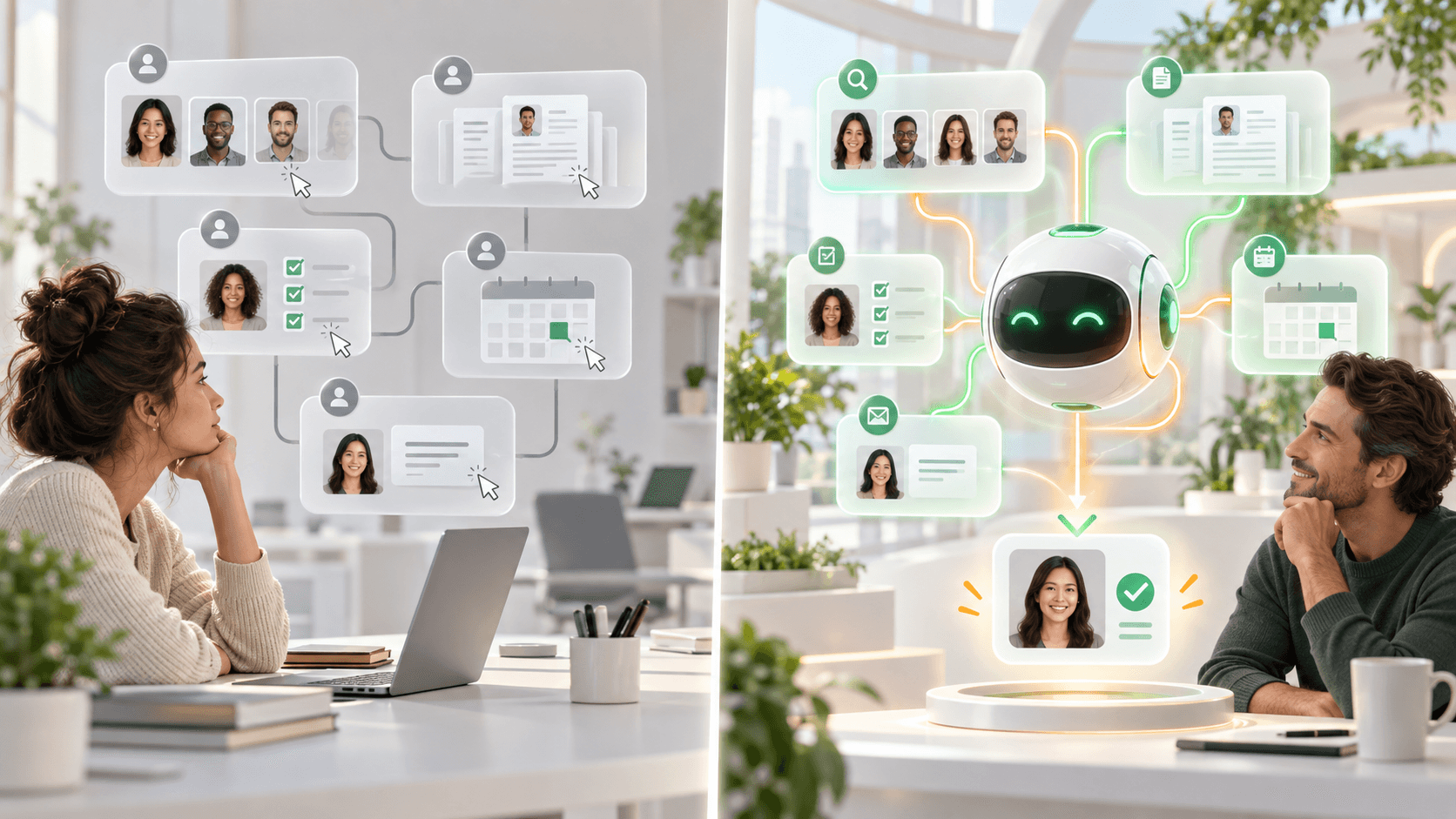
An AI agent is an AI-powered system designed to pursue a goal, decide which steps are needed, use information and tools, take actions, monitor progress, and move the work toward an outcome. Instead of asking an employee to manually coordinate every small step, an agent can handle a connected workflow while people remain responsible for judgment, approvals, relationships, and decisions.
For a recruiting team, that could mean moving from “find me some candidates” to “find qualified senior engineers in Bengaluru, enrich their profiles, engage the strongest matches, screen them, test them, and keep me updated.” For a sales team, it could mean identifying prospects, researching companies, preparing personalized messaging, and organizing follow-up.
This guide explains what AI agents are, how they work, what makes them different from other AI tools, and why agentic workflows matter for modern businesses.
What Is an AI Agent?
An AI agent is a software system that uses artificial intelligence to work toward a defined objective. The important distinction is that an agent is not limited to producing a response. It can reason about a task, determine what needs to happen next, use connected tools or data, perform actions, and evaluate progress.
A simple way to understand an AI agent is:
Goal → Plan → Act → Evaluate → Progress → Outcome
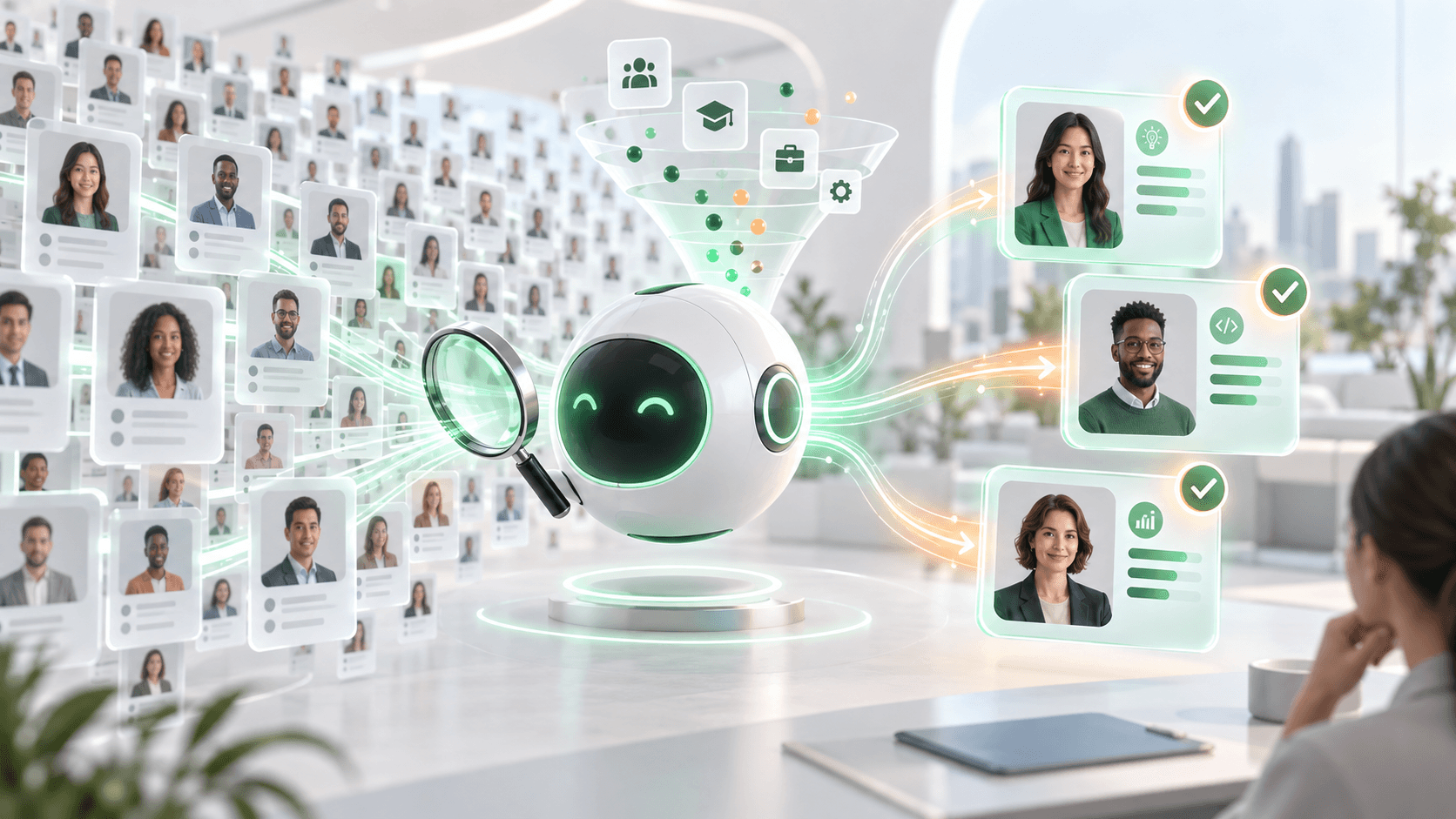
Suppose a hiring manager says, “I need 50 qualified senior Java engineers in Bengaluru.” A conventional AI assistant might help write the job description. An AI agent can approach the request as a workflow. It can search for relevant professionals, enrich information, help engage candidates, organize screening, coordinate testing, and support verification.
The agent does not replace the hiring manager’s responsibility. Instead, it reduces the operational effort required to move from a hiring requirement to a qualified shortlist.
How Do AI Agents Work?
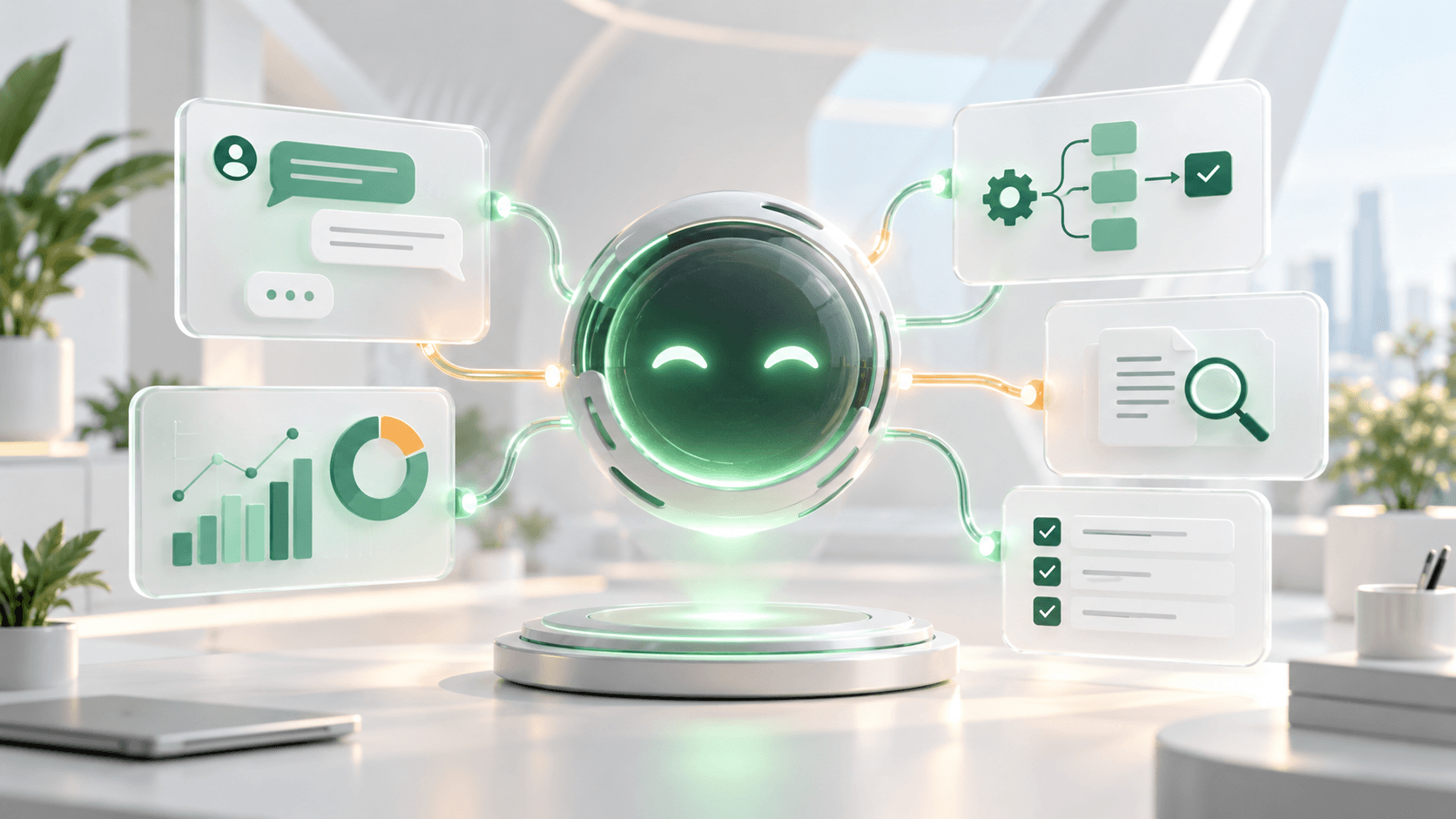
AI agents generally combine several capabilities: an AI model, instructions or goals, access to information, tools that allow actions, memory or workflow state, and rules that define what the system can and cannot do.
First, the agent interprets the objective. Second, it determines a plan. Third, it executes one or more steps. Fourth, it evaluates the information or result it receives. Finally, it continues, adjusts, or asks for human input.
This makes an agent fundamentally different from a one-shot prompt. A prompt asks the system to generate something now. An agent is designed to continue working through a process.
For business users, the practical value is orchestration. Instead of operating ten disconnected steps manually, the user can communicate the outcome and let the system coordinate the workflow.
What Is Agentic AI?
Agentic AI describes AI systems that can pursue objectives and take actions with some degree of autonomy. The word “agentic” focuses on behavior: the system is not merely generating content; it is using AI to decide and execute a sequence of actions.
Agentic AI can be used in many areas. In recruiting, it can support sourcing and candidate workflows. In sales, it can help identify and research prospects. In research, it can gather information and organize findings. In operations, it can coordinate repetitive processes.
The level of autonomy varies. Some agents require approval before every meaningful action. Others can execute several low-risk steps independently and return results for review. The best model depends on the workflow, risk, data access, and business requirements.
What Is the Difference Between an AI Agent and a Chatbot?
A chatbot is primarily conversational. You ask a question, and it responds. It may be highly capable, but the interaction normally revolves around generating an answer.
An AI agent is action-oriented. You provide an objective, and the system can determine the sequence of work needed to pursue it.
For example, a recruiting chatbot could answer, “What skills should I look for in a backend engineer?” A recruiting agent could take a defined hiring requirement and coordinate candidate search, enrichment, outreach, screening, testing, and verification.
The distinction is not simply whether a product has a chat box. The real question is whether the system can execute a multi-step workflow toward an outcome.
What Is the Difference Between an AI Agent and an AI Copilot?
A copilot generally assists a human while the human directs the work step by step. It might summarize a profile, draft an email, suggest a Boolean search, or recommend a candidate.
An agent can take a broader goal and coordinate several actions. That does not mean humans disappear. In well-designed workflows, humans remain in control of consequential decisions while AI handles repetitive execution.
A useful rule is: if the user must tell the system what to do at every step, it behaves more like a copilot. If the user can define an outcome and the system can independently coordinate multiple approved steps, it is closer to an agent.
What Can AI Agents Do for Businesses?
AI agents can support workflows that contain repeatable research, decision-support, communication, and execution steps.
Common applications include:
• recruiting and talent sourcing;
• sales prospecting and lead generation;
• customer research;
• market research;
• personalized outreach;
• data enrichment;
• administrative workflow management;
• content and research operations;
• customer support processes.
The strongest use cases are usually not single clicks. They are workflows where many small actions add up to a valuable result.
How Are AI Agents Changing Recruiting?
Recruiting is a natural fit for agentic workflows because the process contains many connected activities. A recruiter may need to define a profile, search for candidates, inspect professional backgrounds, enrich contact information, personalize outreach, follow up, screen responses, coordinate assessments, and prepare a shortlist.
An AI recruiting agent can connect those stages.
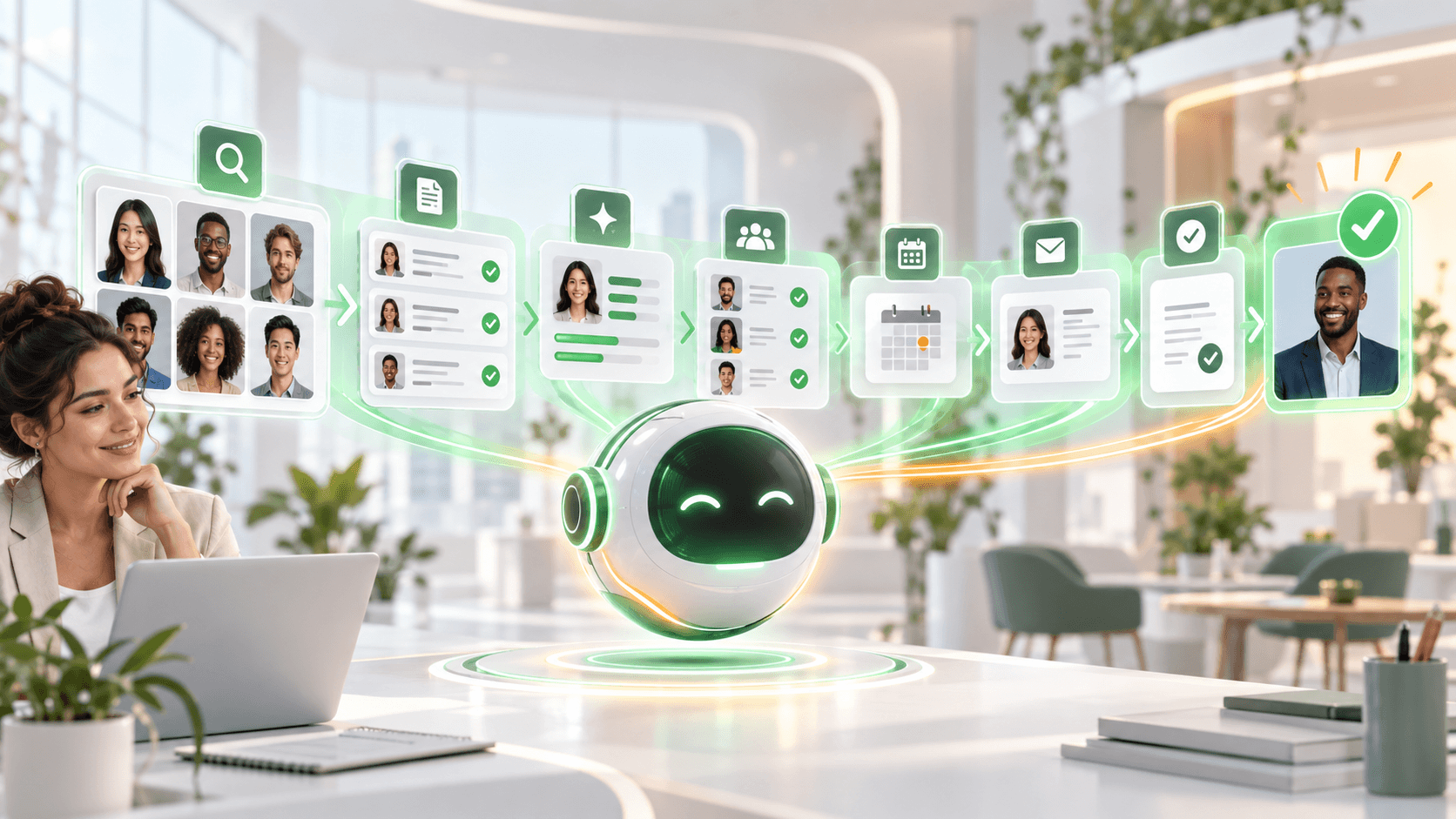
ezyConneqt approaches recruiting through a workflow of Search → Enrich → Engage → Screen → Test → Verify. The user communicates the hiring objective and criteria, while the agent handles operational steps and keeps the human involved where judgment matters.
This is especially useful when hiring teams need to move quickly without simply increasing recruiter workload.
What Should You Look for in an AI Agent Platform?
A business should evaluate more than the quality of the underlying AI model. The platform needs to work in the context of the actual business process.
Important questions include:
• Can users define outcomes in natural language?
• Can the agent execute multiple connected steps?
• What information and tools can it access?
• Can users control permissions and approvals?
• Is progress visible?
• Can humans review important decisions?
• Does the system support reliable data handling?
• Can it integrate with existing workflows?
• Does it measure outcomes rather than just activity?
The strongest agent is not necessarily the one with the most features. It is the one that reliably reduces meaningful work while preserving appropriate human control.
How Should Businesses Start Using AI Agents?
Start with one workflow that is repetitive, measurable, and valuable. Define the desired outcome before choosing the technology.
For example, instead of saying “we want AI,” a recruiting team can define: “We want a faster way to produce a qualified shortlist for specialized roles.”
Then map the current process, identify repetitive steps, decide which actions AI can perform, determine where approval is required, and measure the result.
This approach prevents AI adoption from becoming a collection of disconnected experiments. The goal is to redesign work around outcomes.
How Does ezyConneqt Use AI Agents?
ezyConneqt is designed around the idea that users should be able to communicate what they need and let an AI agent coordinate the work.
Its recruiting agent can work through Search, Enrich, Engage, Screen, Test, and Verify. A user can describe a requirement such as the role, experience, skills, location, or other criteria and allow the workflow to move through the necessary stages.
The human stays in control of the important decisions. The agent is there to reduce the manual work between the initial requirement and the useful result.
That outcome-focused model is the central difference between simply adding AI features to a product and designing a workflow around an AI agent.
Frequently Asked Questions
What is an AI agent?
An AI agent is an AI-powered system that can understand a goal, plan tasks, use tools, take actions, track progress, and work toward an outcome.
How does an AI agent work?
An AI agent interprets an objective, creates or follows a plan, performs actions using available tools and information, evaluates progress, and continues or requests human input when needed.
What is agentic AI?
Agentic AI refers to AI systems designed to pursue objectives and take actions rather than only generate responses.
What is the difference between AI agents and chatbots?
Chatbots primarily focus on conversation and answers. AI agents are designed to execute multi-step workflows toward a goal.
Can AI agents automate business processes?
Yes. AI agents can coordinate repetitive and multi-step workflows in recruiting, sales, research, marketing, operations, and other functions.
Can AI agents replace employees?
AI agents are generally most valuable as workforce augmentation. They can handle operational work while people retain judgment, accountability, relationships, and important decisions.
What is the best AI agent for business?
The right platform depends on the workflow, data, integrations, autonomy, governance, and business outcome a company needs.
How does ezyConneqt use AI agents?
ezyConneqt uses an agentic workflow for recruiting in which the AI can search, enrich, engage, screen, test, and verify candidates around a defined hiring goal.
Final Takeaway
The future of business AI is not just better answers. It is better execution. With ezyConneqt, teams can define the outcome and let an AI agent take on the operational work required to move toward it.